Traveling Abroad with Kids: Can the Other Parent Stop You? Legal Issues in Cross-Border Custody
How a 'Simple' Vacation Can Turn Into an International Kidnapping Charge
FAMILY RELATIONSHIPS
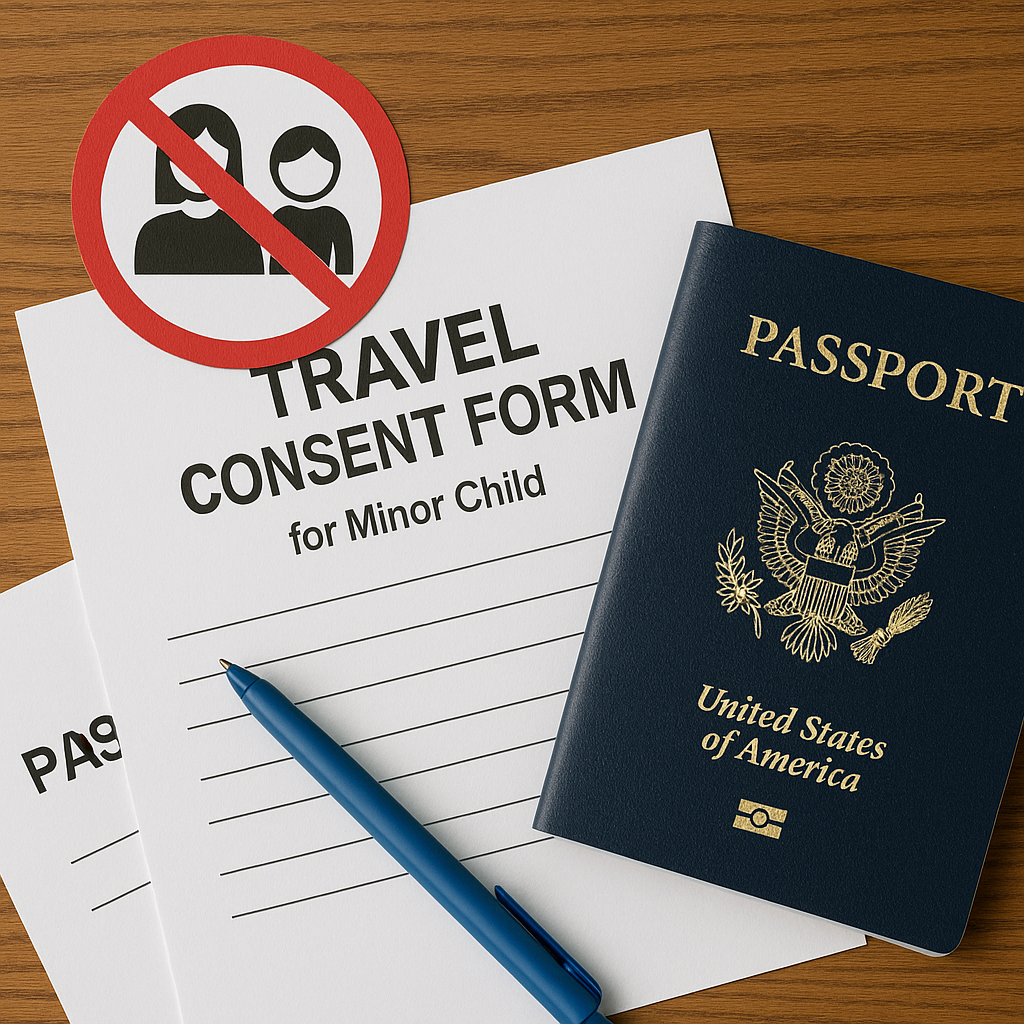
“I had booked the flights and hotel. I was going to take the kids to Europe for summer break. Then my ex-husband stopped me at the airport.”
This happened to a friend of mine. She’d been divorced for three years. She and her ex had joint custody, and the kids lived with her. She thought taking them on a trip abroad—it’s not like she wasn’t coming back—would be no problem. When she got to the airport check-in counter, the airline asked for a signed travel consent letter from the other parent. She didn’t have one. She called her ex, and he said no. That trip never happened. Flights and hotels were a total loss.
Let’s talk about what you actually need to know when traveling outside the U.S. or Canada with minor children—and how the other parent can, legally, stop you.
Travel Consent Letters: Not Just a “Scrap of Paper”
A lot of people assume that if they’re a legal parent and have custody, taking their child out of the country is their right. In North America, that assumption can get you turned away at the gate.
In both the U.S. and Canada, if both parents share custody—whether it’s joint custody or shared parenting—neither parent can take the child out of the country without the other parent’s written consent. This isn’t just an airline rule. It’s based on international protocols for preventing parental child abduction and protecting children in cross-border situations.
Border authorities (CBP in the U.S., CBSA in Canada) and airlines both have the authority to ask for this letter at departure. If you don’t have it, they can refuse to let the child board.
And a scribbled note on a napkin won’t cut it. A proper travel consent letter should include:
1.Child’s full name, date of birth, and passport number
2.Traveling parent’s name and passport information
3.Travel destination and dates
4.Contact information for the non-traveling parent
5.The non-traveling parent’s signature (preferably notarized)
Key point: Even if you’re the parent staying behind, you absolutely have the power to stop the trip—by simply refusing to sign that letter.
Court Orders Can “Lock Down” a Child’s Passport
In divorce or separation cases where one parent is considered a flight risk, the other parent can ask the court to restrict international travel.
Common court-ordered restrictions include:
Passport surrender: The court may order that the child’s passport be held by one parent or deposited with the court.
Travel ban: The court can explicitly forbid one parent from taking the child out of state or out of the country.
Supervised travel: Even if travel is allowed, the court may require detailed itineraries, check-in requirements, or other conditions.
I know a mother whose ex-husband is a Canadian citizen with family in Europe. When they divorced, the court included a specific clause: the children cannot leave the country without both parents’ written consent, and travel is restricted to Hague Convention member countries. That clause gave her the legal backing to refuse when he wanted to take the kids to a non-member country to visit relatives.
Sole Custody: A Different Situation
If you have sole custody, the rules are different.
If a court has awarded you sole custody and the other parent has no custodial rights or visitation, you generally do not need their consent to travel. But here’s the catch—you have to be able to prove it.
Airline agents and border officers don’t know your family history. All they see is an adult traveling with a child. If you don’t have a consent letter from the other parent, they can ask for a copy of the court order proving you have sole custody.
Even with sole custody, if the other parent objects, a court can still intervene. A safe practice: carry a copy of your custody order when you travel. It’s easier to show than to explain.
The Dual Citizenship Trap
If your child holds dual citizenship—say, U.S.-Canadian, or U.S.-Chinese—things get more complicated.
Here’s a real scenario: a child is a U.S. citizen, and one parent is a Chinese citizen. That parent takes the child to China. Once there, because the child also has Chinese citizenship, the other parent may find that the Hague Convention remedies available in the U.S. don’t work the same way in China. Even though both countries are signatories to the Hague Convention, enforcement and interpretation can differ significantly.
If your child has dual citizenship, talk to a lawyer who specializes in international custody issues before traveling. Don’t assume that being a legal parent in the U.S. gives you automatic control once you cross the border.
Practical Tips: Do Your Homework Before You Go
1. Check your custody order
Before booking anything, review your divorce decree or separation agreement. Some orders explicitly say “travel outside the country requires written consent from both parents.” Some say “child shall not be removed from the state/province.” Others have no restrictions. Your custody order is the starting point.
2. Get the consent letter in writing
Even if you have a good relationship and the other parent says yes verbally, get it in writing. A notarized letter isn’t always required, but it carries more weight with border officials.
3. Pack a “travel file”
Carry the child’s passport, the original (or notarized) consent letter, a copy of your custody order, and the non-traveling parent’s contact information. Make copies. Put one set in checked luggage and keep one in your carry-on.
4. If you’re the parent staying behind
If you agree to let your child travel with the other parent, make sure your contact information is in the consent letter. Some families also send the consent letter to the airline in advance to flag the booking.
5. If the other parent refuses to consent
If the other parent is blocking travel without a good reason, you can ask the court for a “travel order.” Judges generally consider what’s in the child’s best interest—educational or family benefits of the trip, length of travel, whether the other parent has a legitimate reason to object. If the trip is reasonable, courts often approve it. But this takes time, so plan ahead.
Traveling with kids should be about making memories, not getting stopped at the gate because of missing paperwork. Whether you’re the parent traveling or the one staying behind, taking a few minutes to get the documents right protects both your child and your rights.
© 2026 The Ledger. All rights reserved.